
October 16 is World Restart a Heart Day. Around the world, it’s a reminder of one simple truth: when someone goes into cardiac arrest, every minute counts. In Quebec, about 10,000 people suffer a cardiac arrest every year, and nine out of ten don’t survive. Yet three simple actions can change everything: calling 911, starting chest compressions and using an automated external defibrillator (AED).
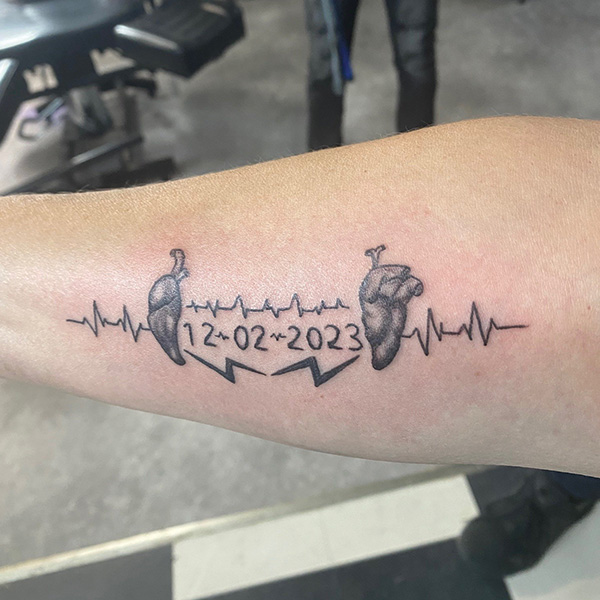
In February 2023, Hugo was 15 when his heart stopped for 16 minutes. His mother, Cathie, agreed to tell us about the day that turned her family’s life upside down. Her account shows that anyone can step in and save a life.
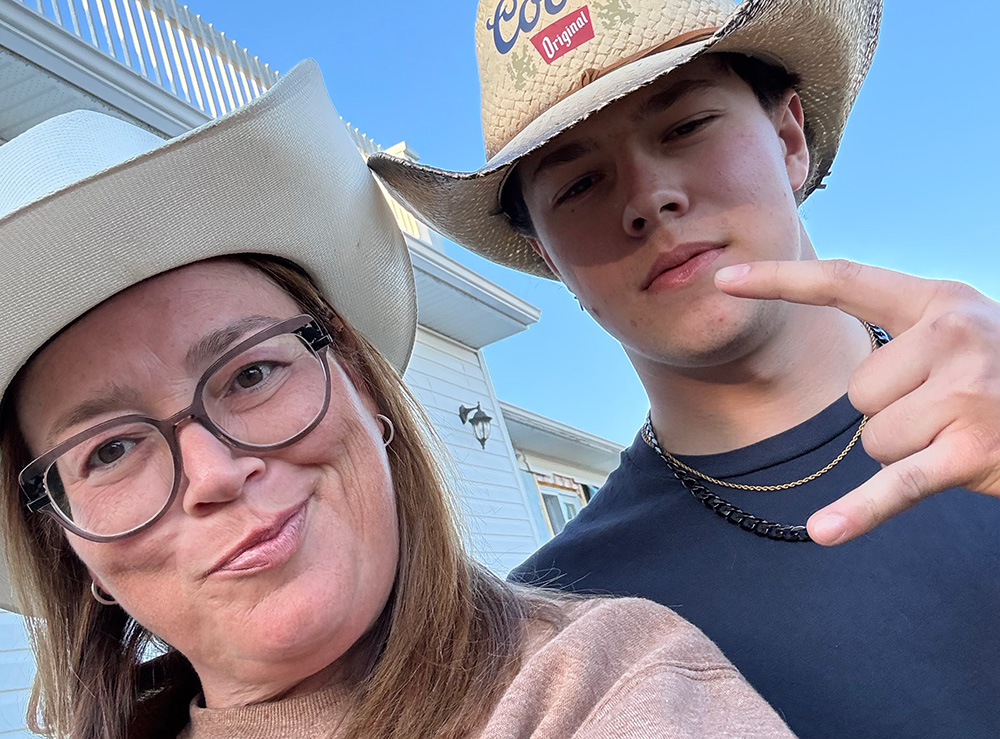
In Cathie’s words, Hugo’s mom
February 12, 2023, was shaping up to be a perfect day. Hugo, our 15-year-old son and a huge sports fan, left early that morning for a basketball tournament. Since it was Super Bowl Sunday, we had planned to stay home and spend the day together as a family.
Around 10 a.m., Hugo texts me to say the tournament is already over because one of the teams didn’t show up, so he’ll be home early. Over lunch, he excitedly tells us all about his morning. A little later, his dad and his younger brother Xavier ask him to come shoot some hoops at the high school. Not surprisingly, Hugo says yes right away.
At 1:27 p.m., everything changes
My phone rings. It’s Xavier. I can tell right away from his voice that something is wrong. He hands the phone to his father, who tells me: “Hugo collapsed. Nobody hit him. He won’t wake up.” Then he holds up the phone so I can hear Hugo breathing… I recognize agonal breathing. I tell him: “Start compressions. I’m on my way!”
I run toward the school. The whole way there, I keep trying to convince myself that everything will be fine.
But when I get to the gym, I see my son lying on the floor. Hugo is unconscious. Dead. I start CPR while someone brings over the automated external defibrillator (AED).
First analysis: shock advised.
I press the button, desperately hoping to bring him back. I keep doing compressions. Two minutes later, the next analysis says: no shock advised. At that moment, I truly believe I’m losing my child. But I keep going. I have no choice.
The minutes feel endless. Then the paramedics arrive. They hook up their equipment and deliver another shock. After 16 long minutes in cardiac arrest, Hugo finally has a pulse again.
But the fight is far from over.
At the hospital, a full team is already working to stabilize him. Tests reveal what caused his cardiac arrest: hypertrophic cardiomyopathy, a heart condition we had no idea he had. The decision is quickly made to transfer him to the Montreal Children’s Hospital.
The next 48 hours are the longest of our lives. Despite my training as a nurse and all my experience, I am first and foremost a mother waiting to find out whether her son will come back to her. The uncertainty about his brain and what the future holds for him is unbearable.
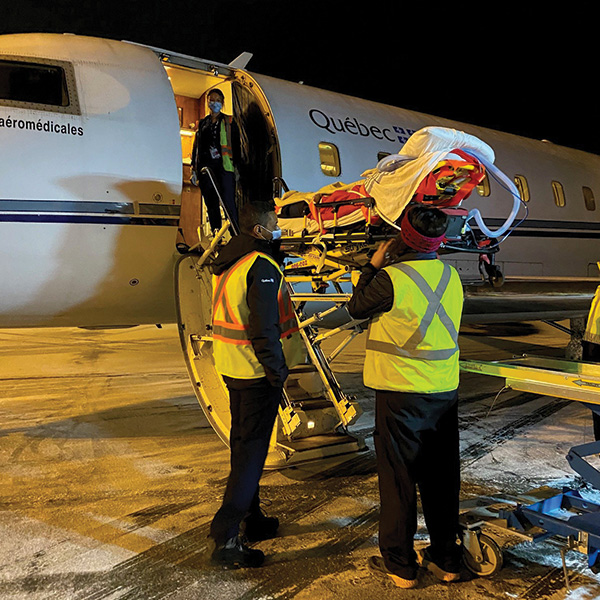
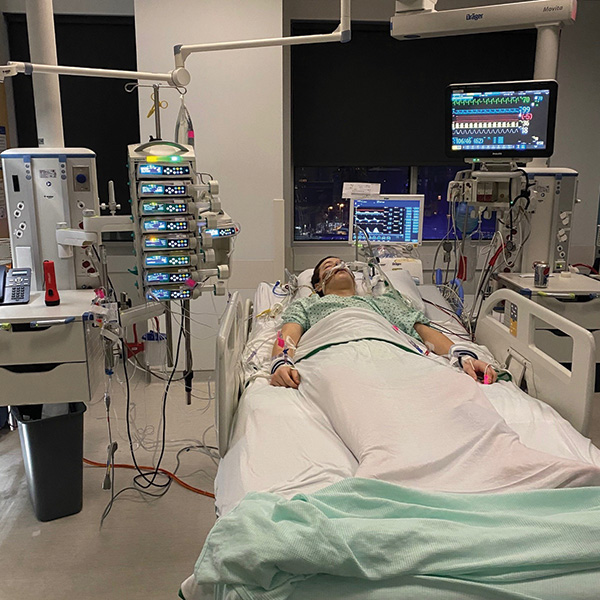
Then, on February 14, a miracle happens.
Hugo is taken off the breathing tube.
When he opens his eyes, we know he’s still himself. Our Hugo.
A week later, our whole family is finally together again: Mom, Dad, Hugo and his two brothers, Thomas and Xavier. The two boys have to undergo heart tests to make sure they don’t have the same silent disease. Fortunately, they’re both perfectly healthy.
Two weeks later, Hugo receives a subcutaneous defibrillator and starts on medication. At last, we can go home.
The road to recovery wasn’t easy, though. For Hugo, who had always loved sports, accepting his new limits was a huge challenge. He had to give up on some of his dreams. But he showed incredible resilience. Little by little, new goals took the place of old ones.
Today, Hugo works full-time as a mechanic. He has a girlfriend, coaches young basketball players, still plays several sports he loves and is living life to the fullest. His reality has changed, and so has ours, but he keeps moving forward with a courage that inspires us every day.
This story is a reminder that life can change in a matter of seconds, at any age. It also shows how important CPR, publicly accessible defibrillators and fast action by first responders really are.
Since that day, Hugo never misses a chance to make the most of every day, and we cherish every moment we get to watch him thrive.
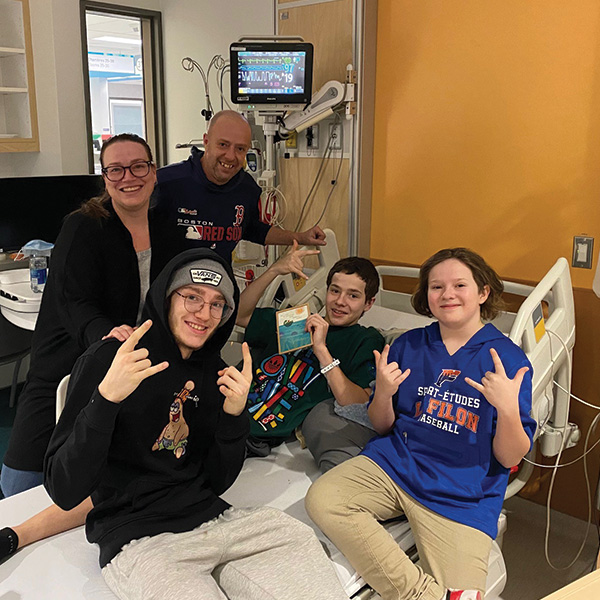
What if you were the next link in the chain?
If Hugo is alive today, it’s because every link in the chain of survival held strong: compressions started without delay, an AED available at the school and a rapid response from first responders. Every minute saved made all the difference.
Thank you to Cathie and her family for so generously sharing their story. Their courage is a reminder of why the Fondation Jacques-de Champlain works every day to make AEDs more widely available, properly registered and easier to find across Quebec.
» Download the free AED-Quebec app to find an AED near you