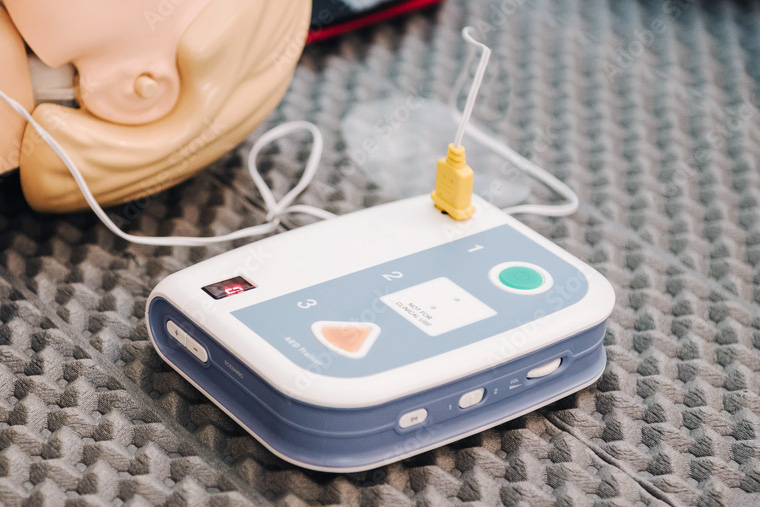



An automated external defibrillator (AED) is a portable, easy-to-use device designed to analyze a person’s heart rhythm during cardiac arrest and, when necessary, deliver an electric shock to restore a normal rhythm.
Early use of an AED can triple a cardiac arrest victim’s chances of survival.


An AED is a mobile, intelligent electronic device that guides the user step by step, using simple voice and visual instructions.
How it works:
Automatic analysis
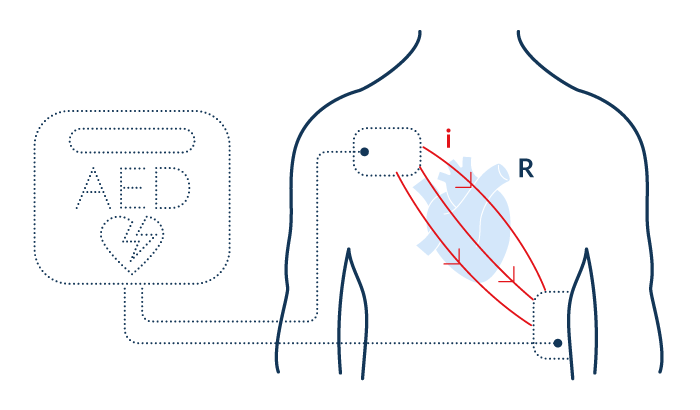
Once the pads are placed on the victim’s chest, the device automatically analyzes the heart rhythm and determines whether an electric shock is needed. No action is required from the user.
Safe defibrillation
If the device detects a shockable rhythm, such as ventricular fibrillation, it charges automatically and tells you when to deliver the shock by pressing a button. The device will never allow a shock if it isn’t necessary.
Step-by-step guidance
From the moment it’s turned on, the AED guides you through each step with voice instructions, from pad placement to cardiopulmonary resuscitation (CPR).
Why is an AED so important?
During a cardiac arrest, the heart stops pumping blood effectively. Without rapid intervention, irreversible brain damage can begin in about 5 minutes. Survival chances decrease by 7 to 10% with each passing minute without defibrillation.
An AED allows for rapid intervention prior to the arrival of emergency services, which can make the difference between life and death. When an AED is used within the first 4 minutes of cardiac arrest, combined with CPR, survival rates can reach up to 75%.
Source: CPR Care. (2025, 24 juillet). How to use an AED: A Step‑by‑Step Guide. Scuba Joey. (2025). The Golden Minutes: Why the First 4 Matter in Cardiac Emergencies.


Who can use an AED?
Anyone can use an AED, with no prior training required. The device is designed to be used by anyone, including children, thanks to its simple and clear voice instructions.
While no formal training is necessary, taking a basic CPR course can increase your comfort and confidence in responding during an emergency.

Where can AEDs be found?
AEDs are installed in many public locations across Quebec, including:
- Airports and train stations
- Shopping centres
- Government buildings
- Arenas and sports facilities
- Schools and universities
- Businesses and offices
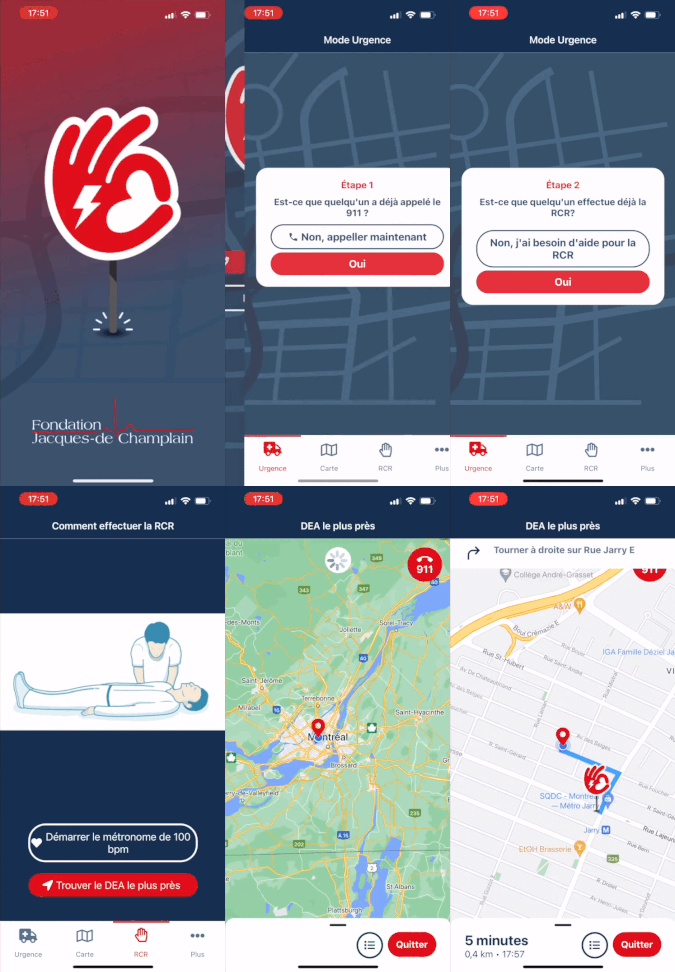
More than 11,000 AEDs are currently listed in the provincial registry maintained by the Jacques‑de Champlain Foundation. With the AED-Quebec mobile app, you can locate the nearest AED in just a few seconds.
In the event of a cardiac arrest, or as soon as someone appears unconscious and isn’t breathing, the chain of survival relies on four essential steps:

Rapid communication:Call 9-1-1 immediately
This is the top priority, and you can ask someone else to make the call while you move on to the next step.

Immediate CPR: Begin chest compressions
Start chest compressions immediately in the centre of the chest, pushing hard and fast, at a rate of at least 100 compressions per minute. Instructions can be provided by the emergency medical responder (EMR) at the 9-1-1 call centre. You can think of the classic Bee Gees song “Stayin’ Alive” to maintain the correct rhythm of 100 compressions per minute. For adults, compressions should be about 5 cm (2 inches) deep. See the CPR and AED training video in the “Useful Links” section.

Rapid defibrillation: Use an AED within the first 5 minutes
Defibrillation should be performed as quickly as possible, ideally within five minutes of cardiac arrest. See the CPR and AED training video in the “Useful Links” section.

Advanced care: Emergency services intervention
These treatments are provided by healthcare professionals, either in the prehospital emergency system by paramedics, or by nurses and doctors upon the victim’s arrival at the hospital.
You can make a difference.
By knowing where AEDs are located and how to use them, you become an essential link in the chain of survival.
A Simple Act That Saves Lives
Don’t be afraid to use an AED. The device is safe and will only deliver a shock if absolutely necessary. You cannot harm the victim by using an AED, but you could save their life.